How Do I Design The World of My Dreams?
Creating a physical, emotional, and spiritual place to inhabit is the most creative thing you can do. But doing this isn't about planning and optimizing what's already there, it's about imagining something that no other person an do: your personal world.
You likely don't need another plan, but you will definitely need to design a world that's yours to live in.,
A business plan is a document that proves you're predictable. A personal brand is a promise to stay that way in public. You've been told you need both. Those two documents are the same product. One makes you legible to investors. The other makes you legible to strangers. Both ask the same thing of you — be consistent, be on-message, be easy to summarize in a sentence. They are tools for being understood quickly by people who don't know you. That is a useful thing to have. It is a terrible thing to organize a life around.
A man came to one of our retreats with all of it done. The deck, the positioning, the brand colors, the three-word value proposition. He could describe himself in the time it takes an elevator to reach the fourth floor. And he was bored out of his skull. Not tired. Bored. He had optimized himself into a version of his life that any competent consultant could have built, and it ran perfectly, and he didn't want to live in it. He'd done everything right and ended up somewhere generic.
That's the thing about optimization. It only works against a target that already exists. You optimize toward the market, toward best practices, toward what converts — and the market, best practices, and what converts are by definition the average of everyone who came before you. Optimize hard enough and you arrive at beige. Not because beige is neutral. Because beige is what you get when you average across everyone. It is the most-chosen option, which is another way of saying it is no one's actual choice.
The work that's truly yours can't be reached from the outside. You can't reverse-engineer it from the market, because it isn't in the market yet. It's in your imagination, which is the one faculty the whole business-plan-and-brand machine is designed to route around. Imagination is unpredictable. It doesn't fit on a slide. So they trained you to distrust it and call that maturity.
Steve Blank spent his career telling founders that no business plan survives first contact with customers. He's right, and the conclusion most people draw from it is the wrong one. They write the plan anyway, just faster, just leaner. The real conclusion is that planning was never the engine. The engine is the thing you're trying to build, and you find that by making it, not by forecasting it. I spent years teaching the design sprint for exactly this reason. You don't plan your way to something new. You prototype it. You build a small version of the real thing and stand inside it and see how it feels.
So build the real thing. The thing itself.
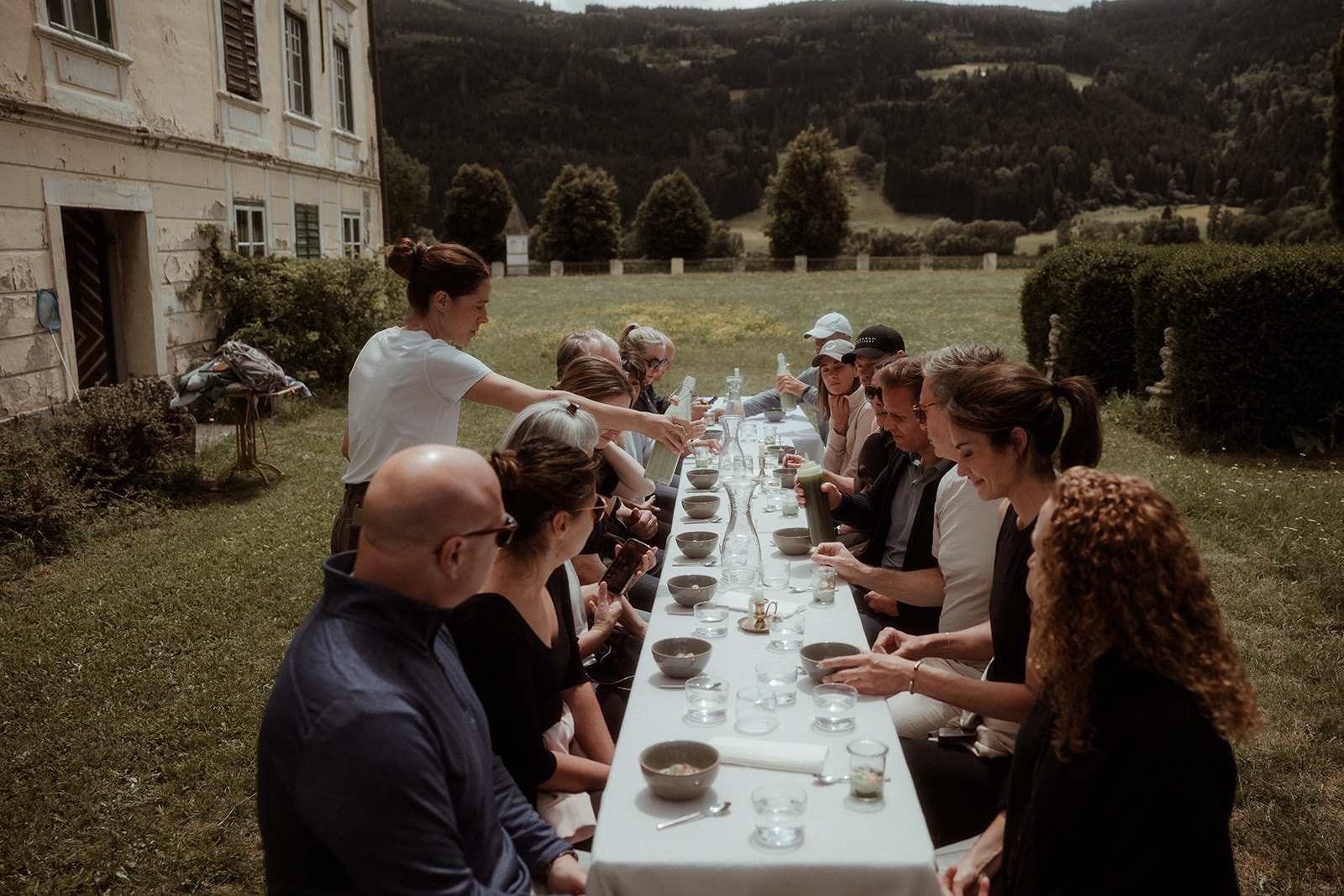
This work asks what the place looks like. What the first thirty seconds in it feel like in your body. What the light is doing. What you can smell. What doesn't get in the door. What you'd never want to leave. You build a world by imagining it specifically enough to walk into — and then the structure, the plan, the money, all the beige administrative stuff, becomes a footnote in service of the world instead of a cage you live inside.
This is harder than writing a plan. A plan you can copy. A world you have to imagine, and imagining is uncomfortable for people who've been rewarded their whole lives for being reliable. You'll want to reach for the template. Don't. The template is how you got the beige life in the first place.
The man at the retreat didn't leave with a better deck. He left having described a world — where it was, what was on the walls, who was allowed in, what time of day it was. Everything else he needed to build came after that, and most of it turned out to be subtraction. He didn't need a new plan. He needed to remember he was allowed to want a specific place, and then go make it real.
That's the whole move. Stop optimizing toward what already exists. Start imagining what's yours. The plan can wait until there's something worth planning for.